
This case study reflects enterprise work completed at Moody's. Product details and visuals have been generalized to respect organizational confidentiality.
Overview
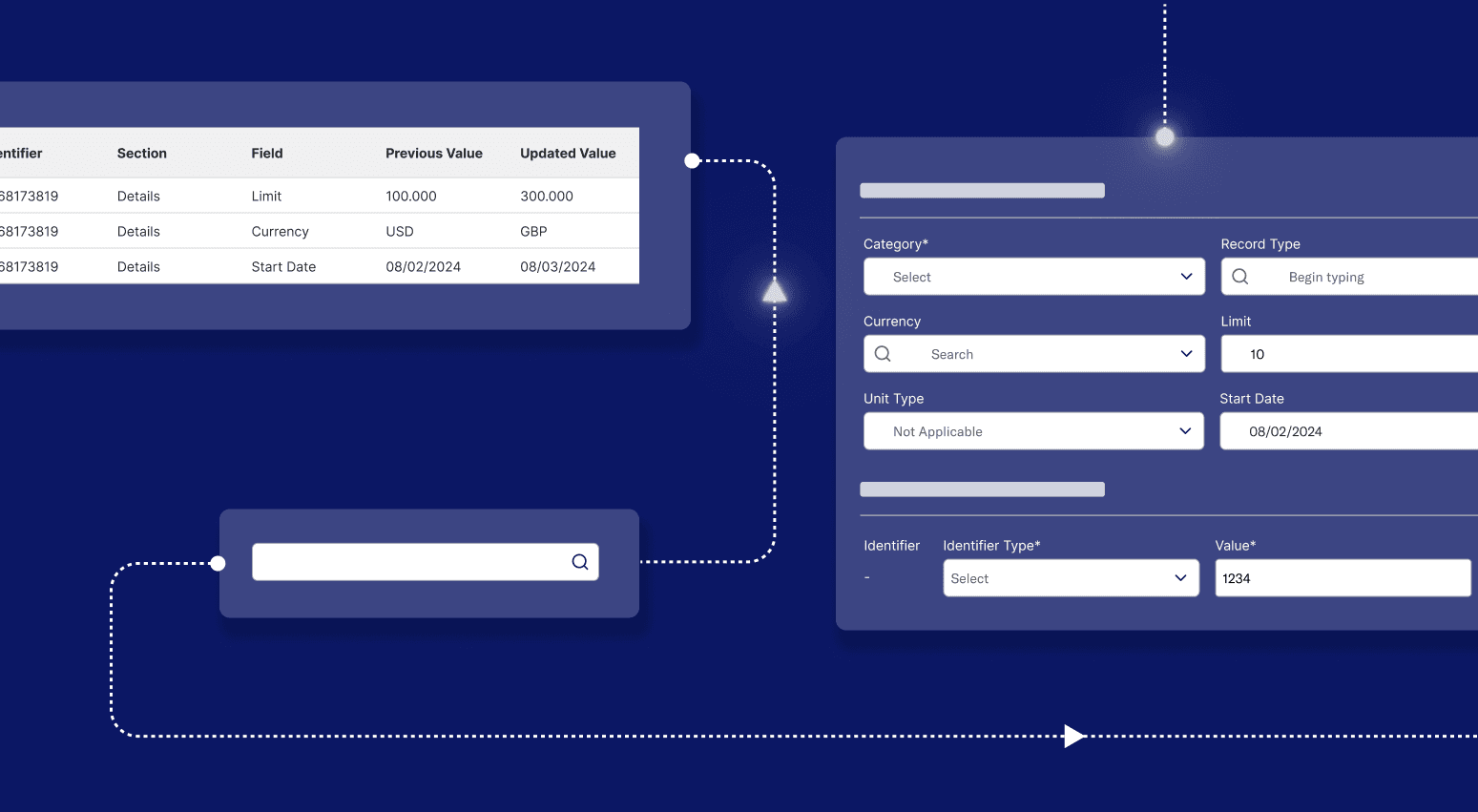
The platform is an internal data governance system responsible for creating and maintaining structured financial instrument records that feed multiple downstream platforms supporting the credit rating lifecycle.
Because this system sits at the beginning of the organization's data pipeline, the quality and structure of each record directly influence the reliability of analytics, research, and rating decisions across the ecosystem.
My work focused on designing workflows that help data stewards manage complex financial records while preserving data integrity, lifecycle traceability, and safe propagation across systems.
My Role
As the solo designer, I owned the productexperience end-to-end, contributing to:
- •Defining record creation and management workflows
- •Delivering user flows, interaction logic, and UI specifications
- •Aligning UX decisions across product, engineering, and business
Core UX Decision Anchors
1. Data Integrity & Cross-System Continuity
Design data entry workflows that reduce friction while protecting accuracy and downstream propagation safety.
2. Designing Within Real System Constraints
Balance usability and scalability by evaluating when technical constraints meaningfully impact the system.
Key Design Decisions
Decision 1 · Designing for Field-Level and Record-Level Governance
Data Integrity & Cross-System Continuity
Field-Level Governance
- Defining standardized field states (editable, read-only, disabled) and dynamic conditions
- Standardized validation rules (while typing, on blur, on submit)
- Cross-record and cross-program behavior alignment
- A staging layer separating draft from committed state

Record-Level Governance (Lifecycle Transitions)
Routine edits were clearly distinguished from lifecycle state changes — transitions that change a record's availability across the entire system. A record moves from Created → Active, and from there can follow different paths:
- Inactive is not a single state — it covers distinct scenarios with different reactivation eligibility. A rating withdrawal after a credit action completes, a transaction cancellation when a deal is terminated, a temporary hold pending review, or maturity at an instrument's end-of-life. The UI surfaces the right reactivation options based on which scenario applies.
- Archived records persist in the system for compliance, but are no longer retrievable or actionable — a terminal state with no return path. Reachable from both Active and Inactive.
- Cancelled is a permanent closure directly from Active — no further transitions are possible.
Each transition was implemented as an explicit action with confirmation requirements and cross-system impact surfaced before execution, so stewards understand the blast radius before committing.

Decision 2 · Retrieval Designed for Context
Designing Within Real System Constraints
The platform manages high-volume datasets, where loading behavior directly impacts system performance.
Instead of applying a single retrieval pattern everywhere, I designed different strategies based on:
- What the user is trying to accomplish
- What the system can realistically support at scale
Each interaction balances usability with backend performance constraints.
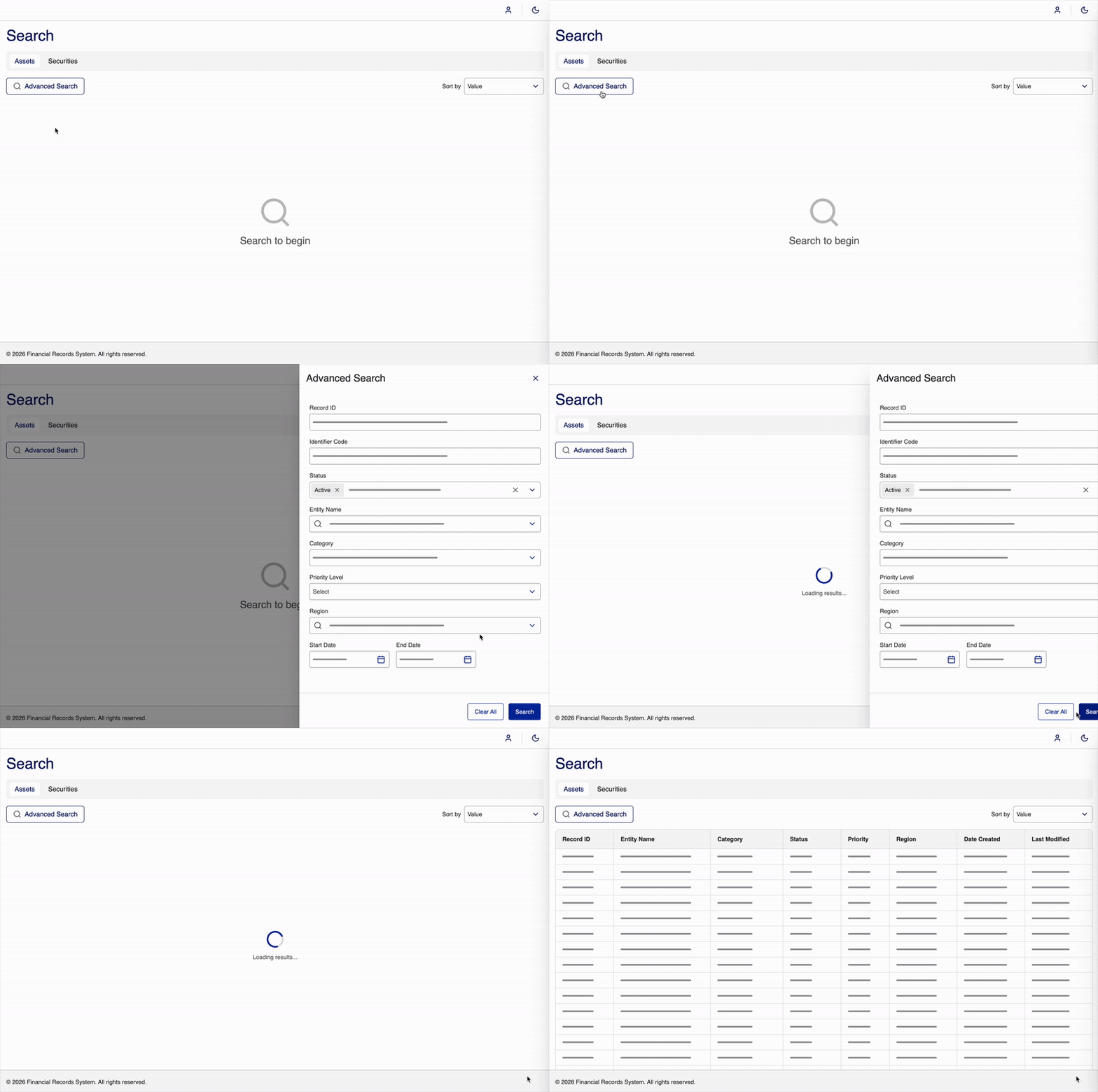
Advanced Search (Search-First)
Users arrive with partial identifiers — name, record ID, or program reference. Search-first avoids loading full datasets while keeping retrieval fast and precise.
Pattern: Advanced search button on main screen to trigger a flyout of all search fields.
A Step Beyond · AI-Assisted Data Intake
Rethinking the Data Steward's Role
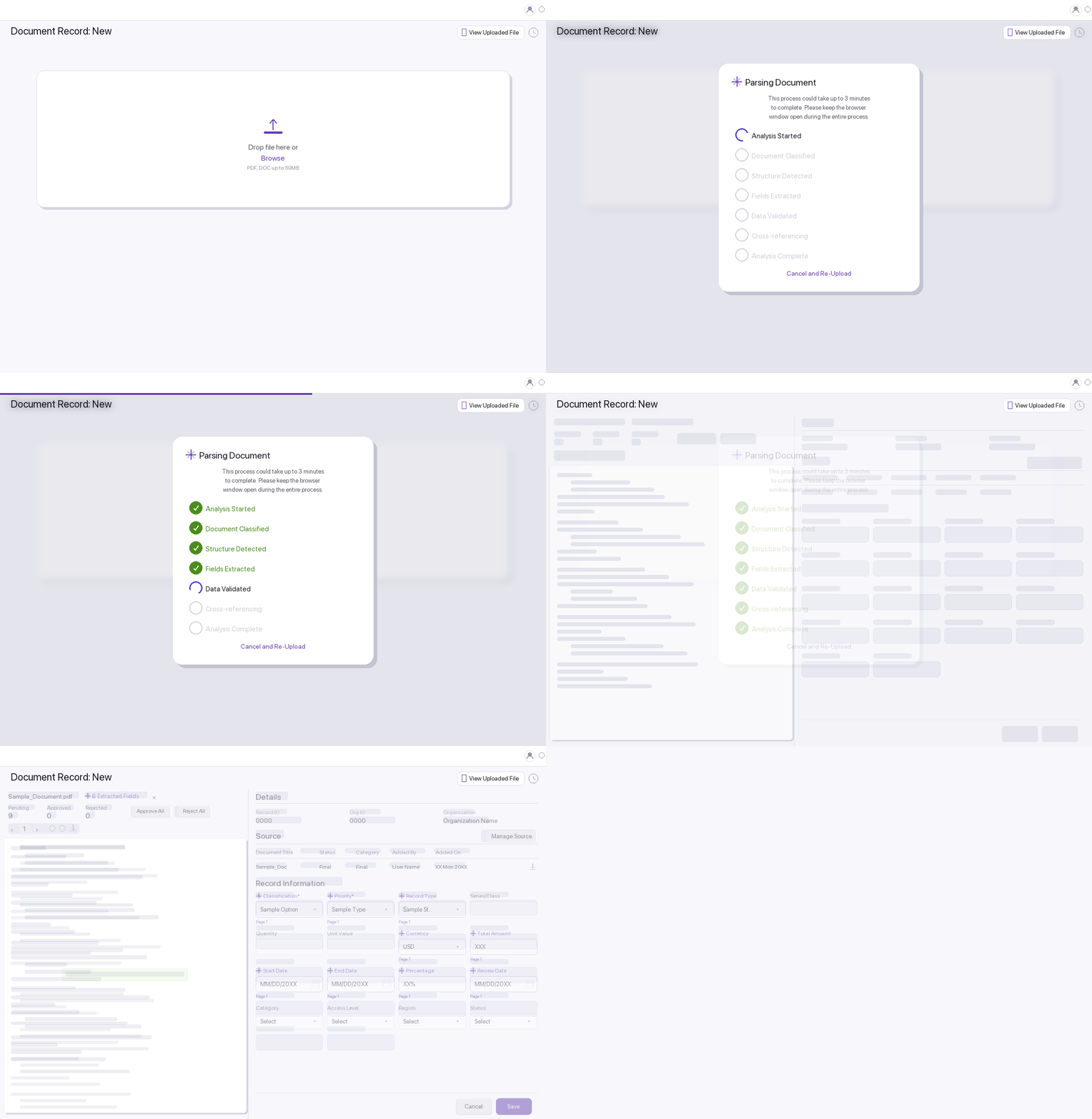
I initiated a proof of concept exploring AI-assisted data intake within the platform.
The goal was not full automation, but a role shift — from manual data entry to supervising, validating, and correcting system-generated data.
This new flow is projected to reduce user effort per record by 60–70%, with increasing training data expected to further minimize manual intervention over time.
Key Explorations
Current State & Ongoing Work
- •Core creation and search flows in active use
- •Ongoing collaboration with PMs on AI-assisted workflows
- •Contributing refinements back to the organization's design system