TL;DR
I helped carry the concept from Hackathon Week to a validated Proof of Concept, designing the user branching and trust signals that make a national lender feel local.
Overview
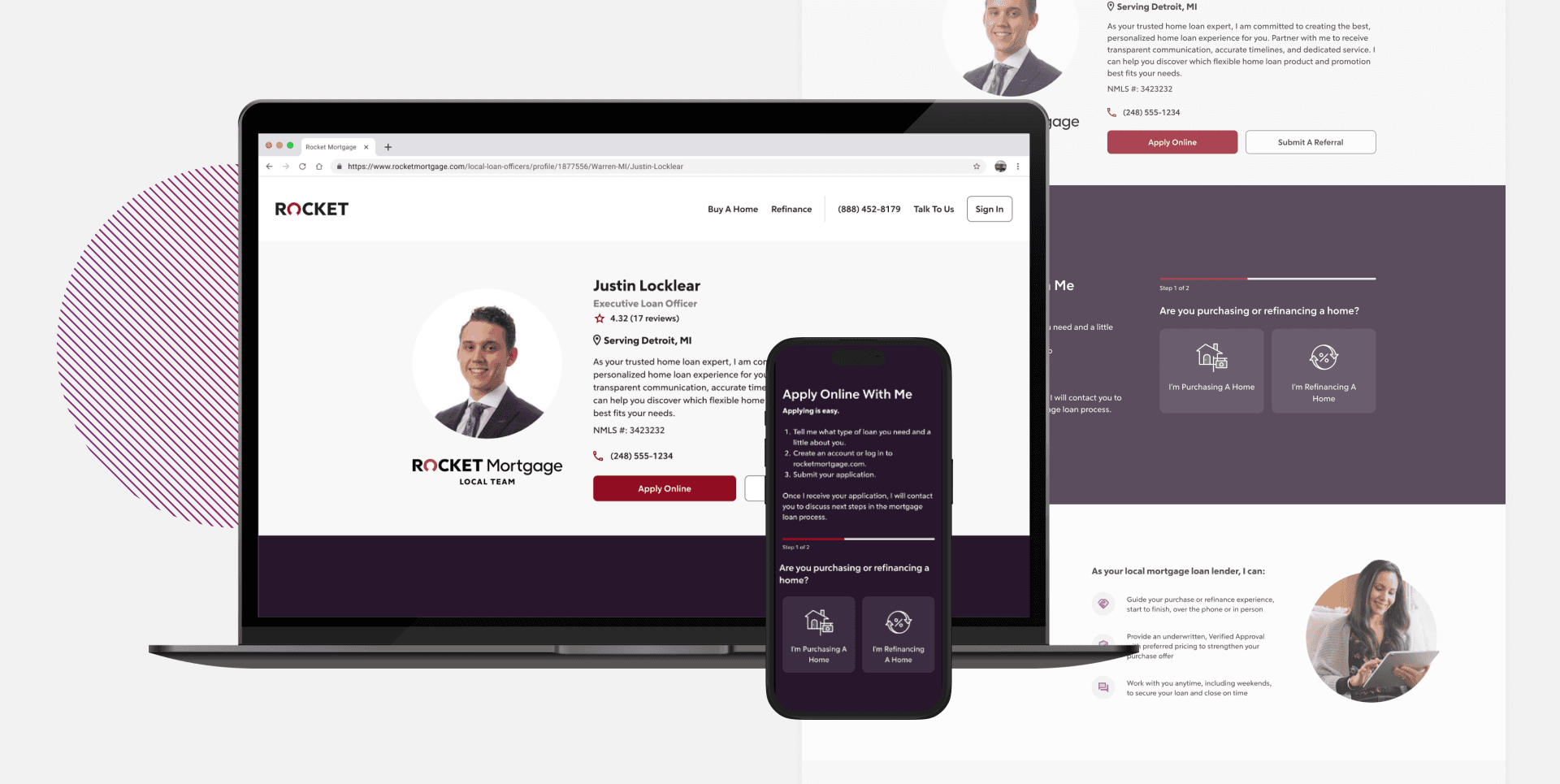
Rocket Local Banker is a localized landing page experience designed to strengthen trust and improve lead conversion between Rocket Mortgage bankers, real estate agents (REAs), and homebuyers.
Rocket is the largest mortgage lender in the U.S., but often perceived as distant compared to local lenders. This project reframed Rocket from a national, online-first brand into a locally present partner, connecting agents and clients directly with a banker serving their area.
Role & Scope
Together with three other designers, I contributed across concept definition, interaction design, prototyping, and usability testing. The concept originated during Rocket's company-wide Hackathon Week and advanced to a Proof of Concept after stakeholder review.
Problem Space
Losing trust to local lenders
Internal data showed Rocket frequently lost agent partnerships to local lenders for two reasons:
- Perceived responsiveness. Local lenders are easier to reach and faster to respond
- Trust through locality. Agents and clients feel more confident working with someone embedded in their community
How might Rocket deliver the scale of a national lender while feeling as trustworthy and accessible as a local one?
Product Direction
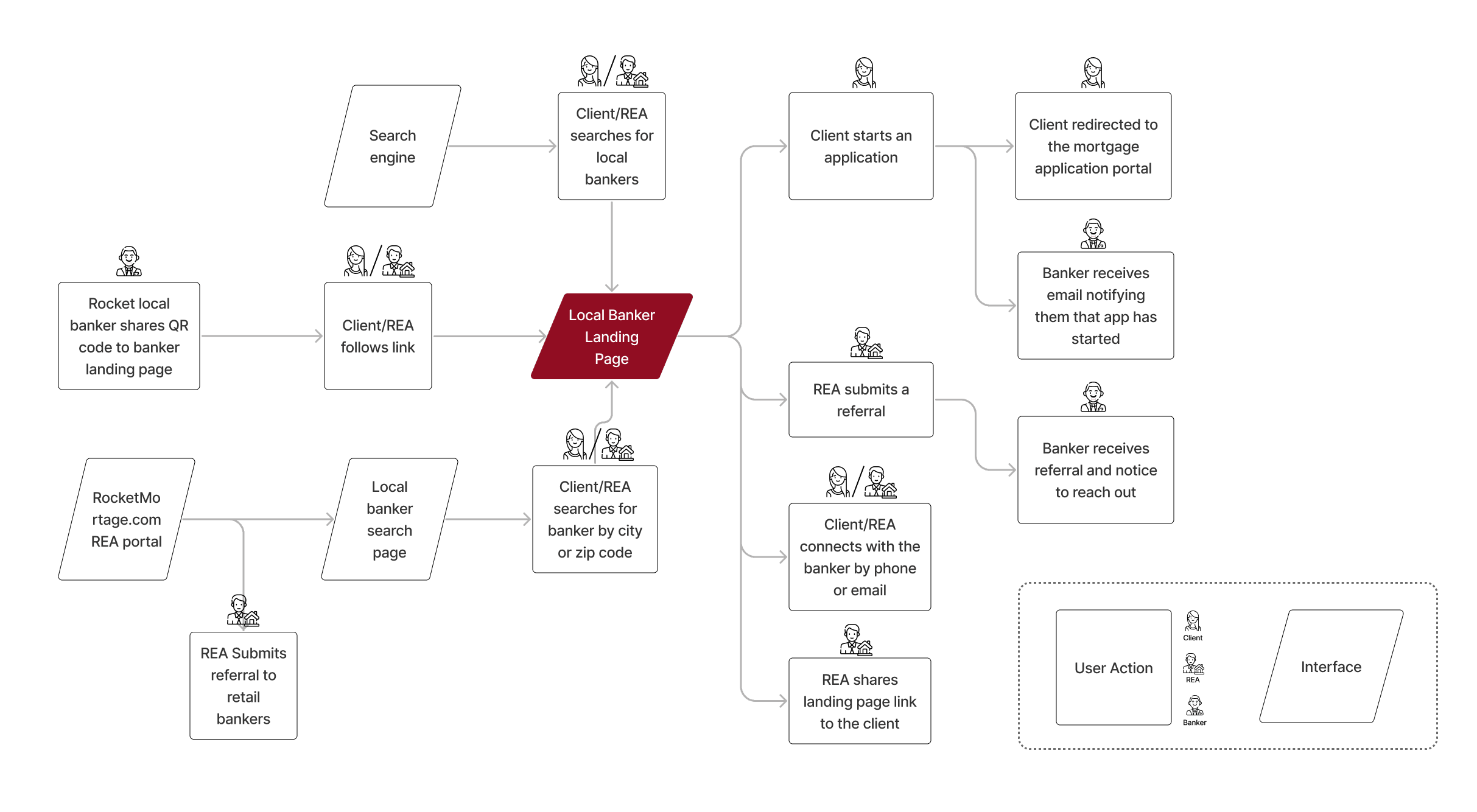
page user flow
Introducing Rocket Local Banker
We introduced Rocket Local Banker: individualized landing pages for bankers, shareable with both clients and REAs. Each page acted as a single contact point, hosted lead actions (applications and referrals), and was reachable from multiple entry points across Rocket's site.
Key Design Decisions
1. Supporting divergent user behaviors without confusion
The landing page needed to support two fundamentally different user paths:
- Clients applying for a mortgage
- Real estate agents submitting referrals
The core risk wasn't visual clutter. It was asking users to self-identify too early; early exploration and testing both showed it caused hesitation and misrouting.
Defining the branching model
I explored multiple approaches to user branching:
- Iteration 1: Branching before entering the page vs. branching within the page
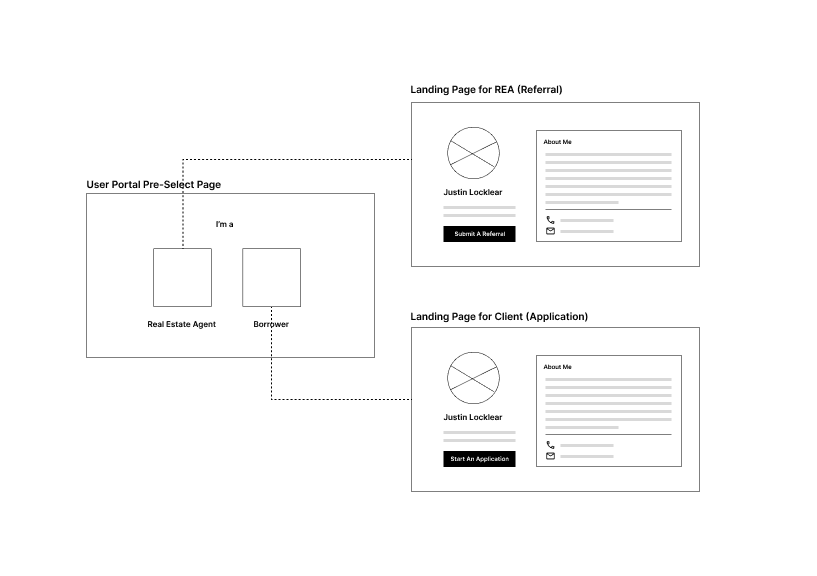
Option 1: Branched Landing Pages
- Tailored experience for different user types
- Extra engineering effort with harder integration into different entry points
- Potential user dropout due to the extra step
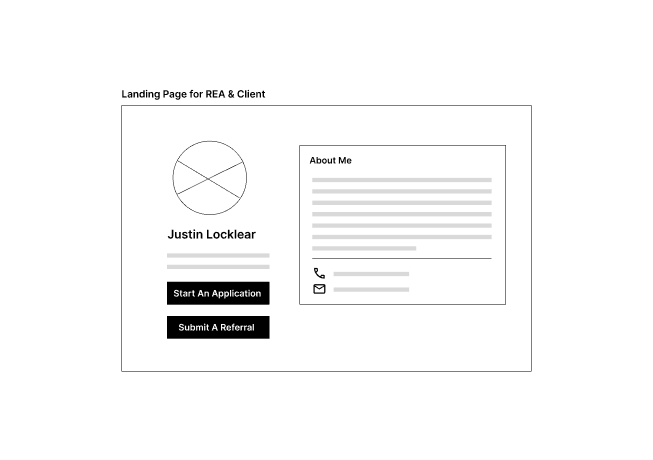
Option 2: One Landing Page for Both Parties
- Standardized landing page, easier implementation
- Link-share friendly, eliminating concerns about clients entering the referral version or REAs entering the application version
- Requires careful design to prevent confusion between two distinct functionalities
- Iteration 2: Branching inside vs. outside an auto-advanced form flow
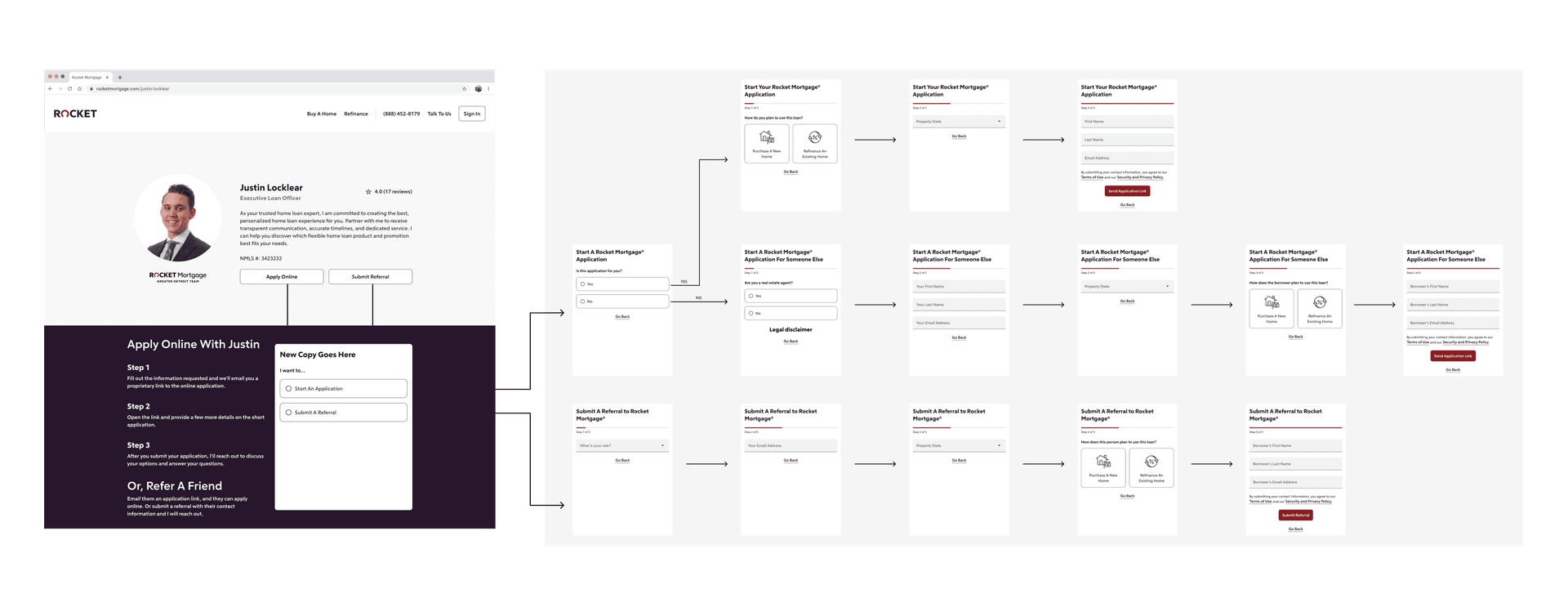
Option 1: Auto-Form for Both Referral & Application
- Consistent format ensures unified method for generating leads
- Additional steps within auto-advanced form could lead to higher dropout rate
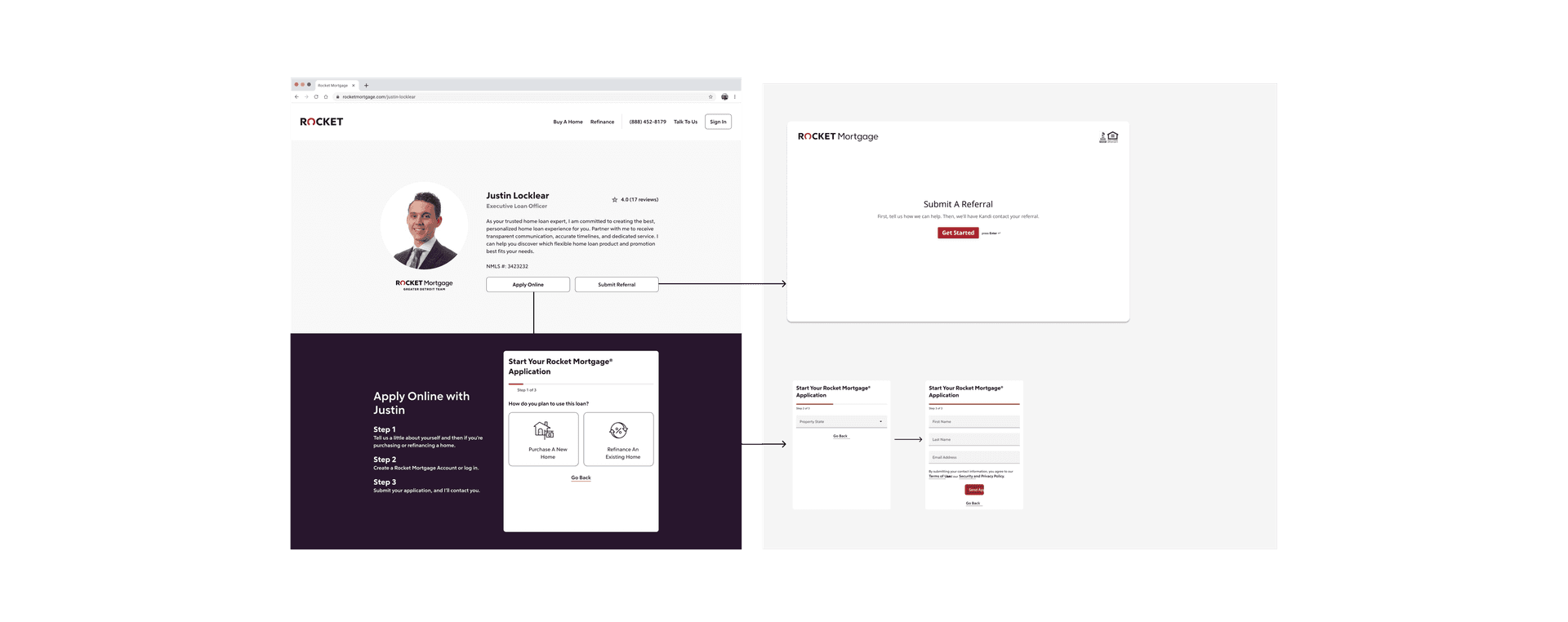
Option 2: Auto-Form for Application & Typeform Modal for Referral
- Dedicated section for client application with simplified steps
- REAs already familiar with Typeform survey modal used in referral process
- Different patterns for the two CTAs require additional integration effort
- May cause inconsistency in user experience
Through iteration and critique, I led the team toward a structure that:
- Clearly separated client and REA actions
- Minimized upfront decision-making
- Used progressive disclosure to introduce complexity only when needed
Users could recognize their path quickly without losing momentum.
2. Building trust through content and structure
Once the interaction model was set, the focus shifted to trust.
I conducted a competitor analysis across local lenders and banker profile pages to identify:
- Content patterns that increased credibility
- What information mattered early vs. later in the funnel
- What could be deferred at the POC stage
These insights shaped the content hierarchy: professional credibility, local presence, and a clear path to convert, without overloading the page.
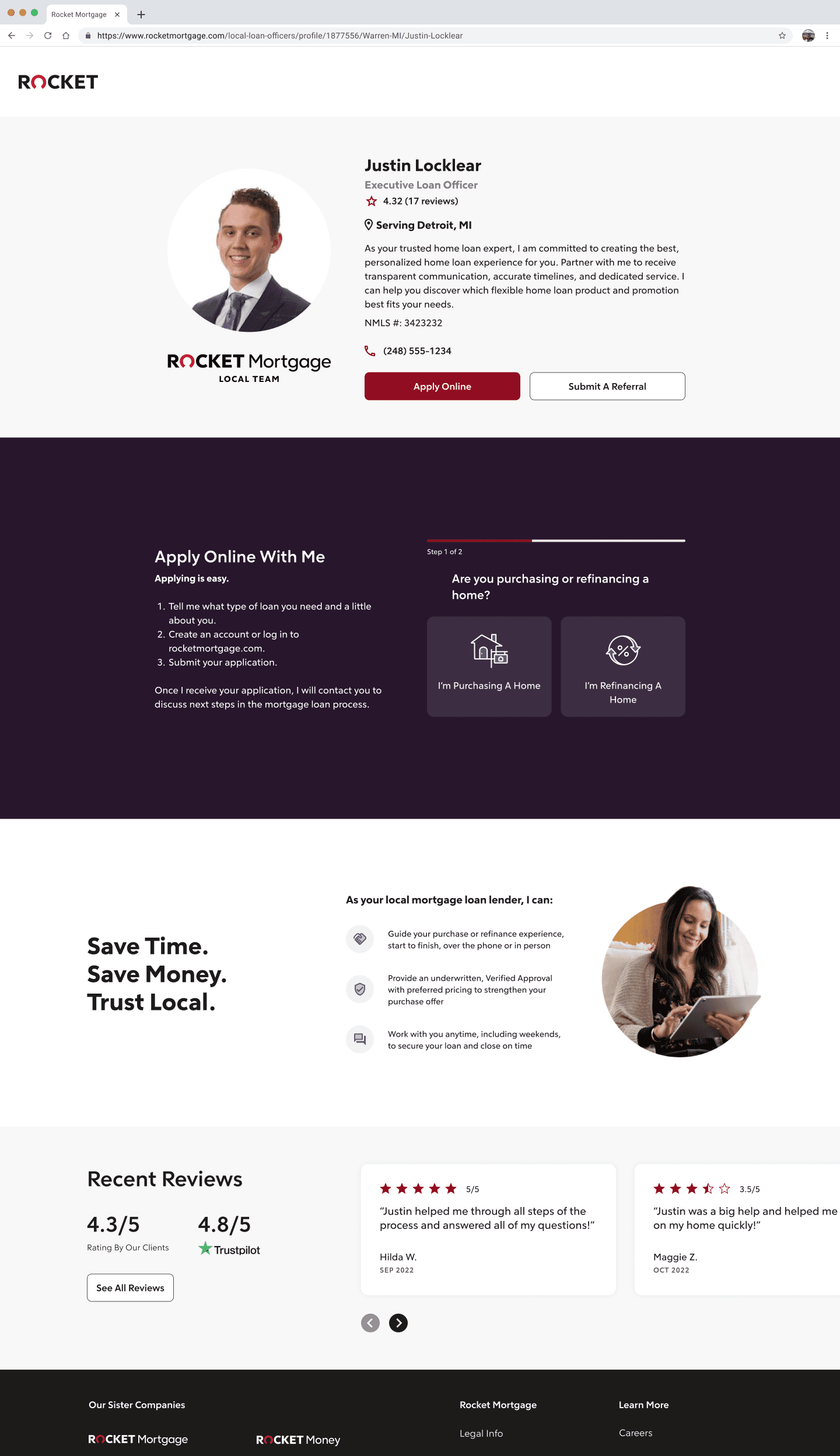
final page design
Validation & Handoff
Usability testing
We tested with 5 real estate agents and 5 clients on three things: confidence in the banker's local legitimacy, clarity of next steps, and what to expect after submitting. The session confirmed both held up and pointed to copy refinements for the final pass.
“All the information I would need is provided and easy to find. Well written, well thought-out profile page for sure.”
Real Estate Agent 1
“The more I think about this page the more I like it. It’s all pretty much there.”
Client 5
“As a real estate agent, this would be easy for my clients to use whether they're purchasing or refinancing a home.”
Real Estate Agent 2
“I like the 3 steps of application in ‘Apply Online with Me’ section. I think this is probably my favorite part.”
Client 4
Service blueprint
I also partnered with product and engineering on a service blueprint covering user actions, frontend touchpoints, and backend processes, which removed a lot of ambiguity at POC handoff.
Outcome
- Successfully presented to company stakeholders
- Advanced from Hackathon concept to Proof of Concept
- Delivered a live, testable landing page experience
- Established a scalable pattern for future banker profile pages
Reflection
My first 0 → 1 product concept under real delivery constraints. The biggest lesson: making structural decisions with incomplete information. We didn't have time to validate everything. The skill was knowing which assumptions to test and which to ship with.